The Hunza Apricot: The Story Behind Apricot Kernel Oil
Blossom-covered valleys, sun-dried apricots and a kernel oil pressed for generations.
By Hunzapure Team2 min read
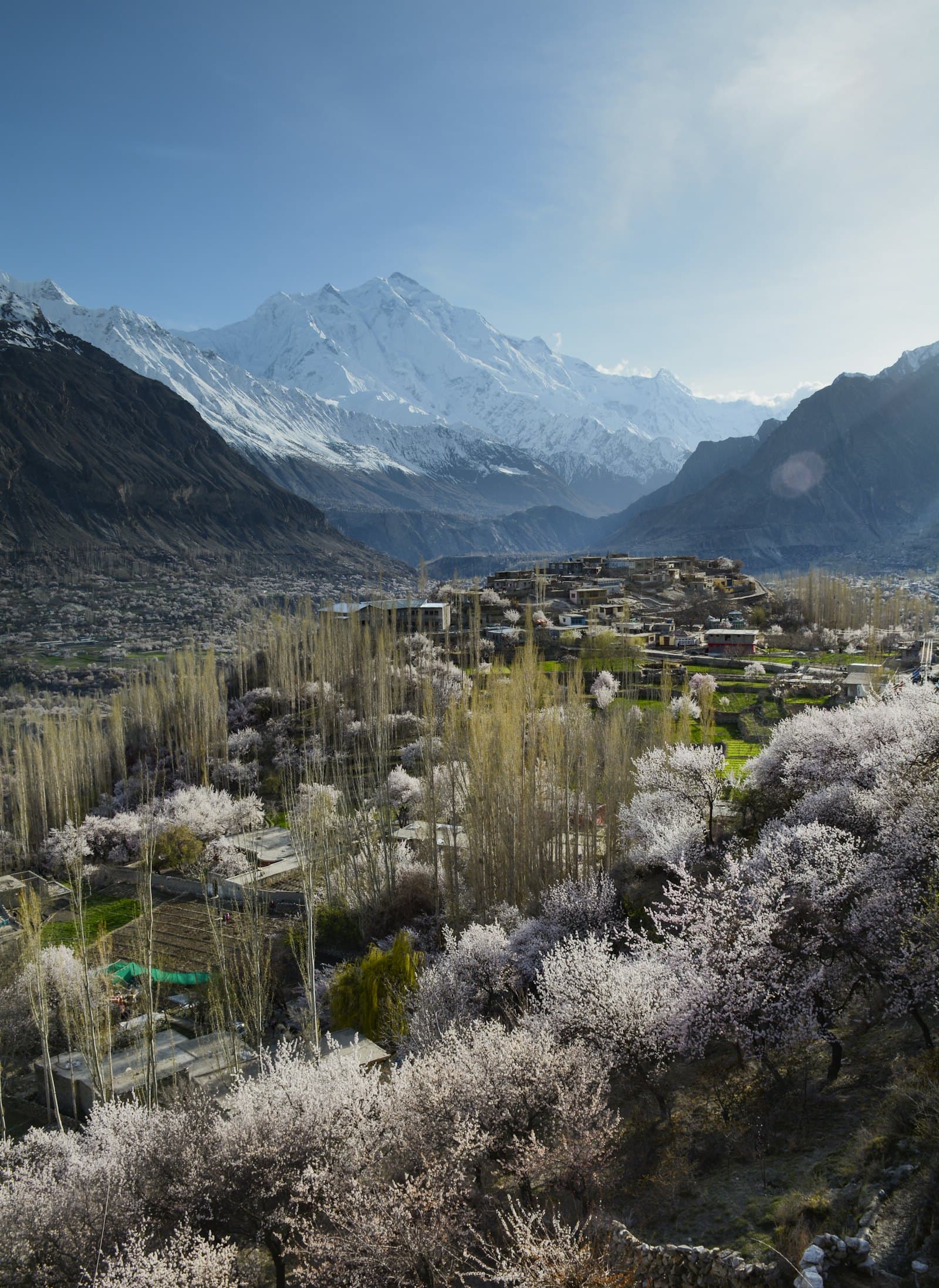
Every spring, the valleys of Gilgit-Baltistan turn pink and white. Apricot trees blossom across the terraces of Hunza, Nagar and Skardu against a backdrop of snow-capped peaks. It's one of the most beautiful sights in Pakistan, drawing visitors from across the country, and the start of a harvest that has shaped mountain life for centuries.
The apricot valleys
Apricots, or khubani, grow well in the high, dry valleys of northern Pakistan, where warm summer days, cold nights and glacier-fed irrigation channels suit the trees. Orchards line the terraced fields around villages, and almost every household has a few trees of its own.
In summer the fruit is eaten fresh. Much of the harvest is laid out on flat rooftops and stone walls to dry in the mountain sun, turning the villages orange. Dried apricots last through the long winters, when the valleys can be cut off by snow.
Nothing wasted
In a place where winters are long and resources precious, every part of the apricot has its use. Once the fruit is dried, the stones are cracked, traditionally by hand with a stone, to reveal the kernel inside. Sweet kernels are eaten as a snack or used in cooking, and kernels have traditionally been pressed to make oil.
That oil has been used in mountain households for generations: on skin and lips chapped by cold wind and high-altitude sun, on hair, for massage, and in the kitchen.
Sweet and bitter kernels
Not all apricot kernels are the same. Some varieties have sweet kernels, others bitter ones. Bitter kernels contain amygdalin, which can release cyanide when eaten, so raw bitter kernels should not be eaten in quantity. The oil used in skin care is processed and labelled for cosmetic use. Always follow the label of any oil you buy.
A note on the 'longevity' story
You may have read that the people of Hunza live unusually long lives thanks to apricots. It's a popular story, repeated in many books and articles, but it isn't backed by reliable evidence, and we'd rather not repeat it as fact. Hunza's apricot tradition is remarkable enough on its own.
Visiting during blossom season
If you're planning a trip north, blossom season usually falls between late March and April, depending on altitude and the year's weather. Lower valleys bloom first. Harvest follows in early to mid summer, when you'll see apricots drying everywhere.
Apricot kernel oil today
Apricot kernel oil is now loved around the world as one of the lightest, most skin-friendly plant oils. It's fine and fluid, absorbs quickly and leaves a satin finish, which makes it ideal for face rituals, scalp massage and as a gentle makeup remover. It's also the lightest choice for summer skin care.
A good oil, warmed between the palms. Some of the most loved beauty rituals in the world rely on nothing more.
Our name
Hunzapure takes its name from that mountain tradition: simple oils, pressed from the kernel, used with care. Discover more about us, compare it with almond in Apricot Oil vs Almond Oil, or try our Apricot Oil.
Frequently asked questions
This article is for general information and isn't medical advice. If you have a skin condition, allergy or concern, please speak to a doctor or pharmacist.